

In this article, I introduce a patent related to an ingredient placement technique for enhanced flavor in seasoned rice, focusing on how culinary considerations and structural arrangement are translated into a technically structured technique.
- Introduction: Designing Flavor Through Spatial Arrangement
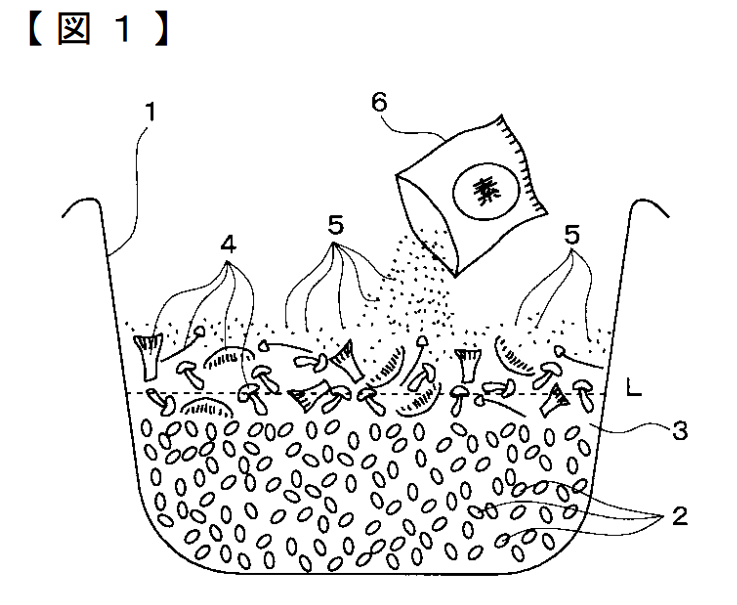
- What the Patent Drawing Shows
- How the Placement System Works
- Benefits for Cooking, Meal Presentation, and Food Product Design
- Engineering & Culinary Design Considerations
- Patent Attorney’s Thoughts
- Application of the Technology: Adaptive Flavor-Topology Arrangement and Edible Spatial Programming Systems
Introduction: Designing Flavor Through Spatial Arrangement
Seasoned rice dishes often rely not only on ingredients but on how those ingredients are arranged. This patent drawing details an ingredient placement technique that enhances flavor delivery by strategically positioning toppings and mix-ins on the rice surface before mixing.
What the Patent Drawing Shows
The diagram illustrates a rice bowl surface divided into specific zones, each assigned an ingredient type:
- Flavor-rich components placed at high-impact positions
- Complementary ingredients arranged in balance around the center
- Visual symmetry designed to enhance aesthetic appeal
- Position-based intent—some ingredients meant to be eaten immediately, others intended to infuse the rice gradually
- A structured framework guiding both preparation and consumption
The bowl becomes both a visual layout and a flavor roadmap.
How the Placement System Works
Ingredients are placed according to flavor intensity and intended timing:
- Strong flavors positioned centrally for immediate impact
- Mild or aromatic elements placed on outer rings
- Items requiring slow diffusion placed in contact with warm rice
- Textural contrasts grouped to maximize spoonful variety
- Layering ensures each bite offers a balanced combination
It is a system that merges cooking technique with spatial design.
Benefits for Cooking, Meal Presentation, and Food Product Design
- Enhances perceived flavor without increasing ingredient quantity
- Creates a visually appealing top view of the dish
- Improves bite-to-bite consistency
- Useful for packaged rice bowls, restaurants, and home cooking
- Provides a reproducible layout for professional food styling
It is a structured approach to flavor engineering.
Engineering & Culinary Design Considerations
- Ingredient moisture levels affect diffusion speed
- Colors must retain contrast after heating
- Heat distribution influences how flavors spread
- Placement must withstand transport in packaged foods
- Ratio of each zone must be carefully balanced
Culinary science meets visual mapping.
Patent Attorney’s Thoughts
Flavor is not only tasted—it is arranged.
This invention shows how thoughtful positioning turns a simple bowl of rice into a deliberate choreography of taste and texture.
Application of the Technology: Adaptive Flavor-Topology Arrangement and Edible Spatial Programming Systems
Original Key Points of the Invention
- A method for arranging ingredients inside seasoned rice so that flavor spreads evenly.
- Placement rules determine how taste, texture, and aroma propagate through the rice mass.
- The technique uses geometry—depth, spacing, and layering—to influence sensory distribution.
- A structured approach that programs flavor flow within a soft, amorphous food medium.
Abstracted Concepts
- Embedding objects in a semi-fluid matrix to control diffusion patterns.
- Spatial programming of flavor intensity via ingredient placement.
- Creating edible “topologies” where taste follows a directed flow.
- Designing consumption experiences through internal geometry.
Transposition Target
- Systems that create programmable edible landscapes—foods whose internal layout modulates emotional response, cognitive focus, or multisensory sequences as the user eats.
Concrete Realization
A soft edible matrix—gel, rice, mousse, or grain blend—is injected with micro-flavor nodes placed according to algorithmic patterns (spiral, gradient, vortex, constellation).
As the user eats, they experience a planned sequence: awakening citrus → stable umami → ascending heat → resolving coolness.
The food becomes an edible “journey map,” orchestrating emotional arcs.
Seasoned rice becomes the foundation of a new field: edible spatial programming where chefs compose experiences like music, using placement instead of sound.
↓Related drawing↓