In this article, I introduce a patent related to a baby diaper changing station with knee pads, focusing on how caregiver comfort and practical usability are translated into a clearly structured and functional design.
- Introduction: A More Comfortable Way to Change Diapers
- What the Patent Drawing Shows
- How the Changing Station Works
- Benefits for Daily Caregiving
- Engineering & Safety Considerations
- Patent Attorney’s Thoughts
- Application of the Technology: Human–Caretaker Ergonomic Synchronization and Micro-Gravity Support Surface Systems
Introduction: A More Comfortable Way to Change Diapers
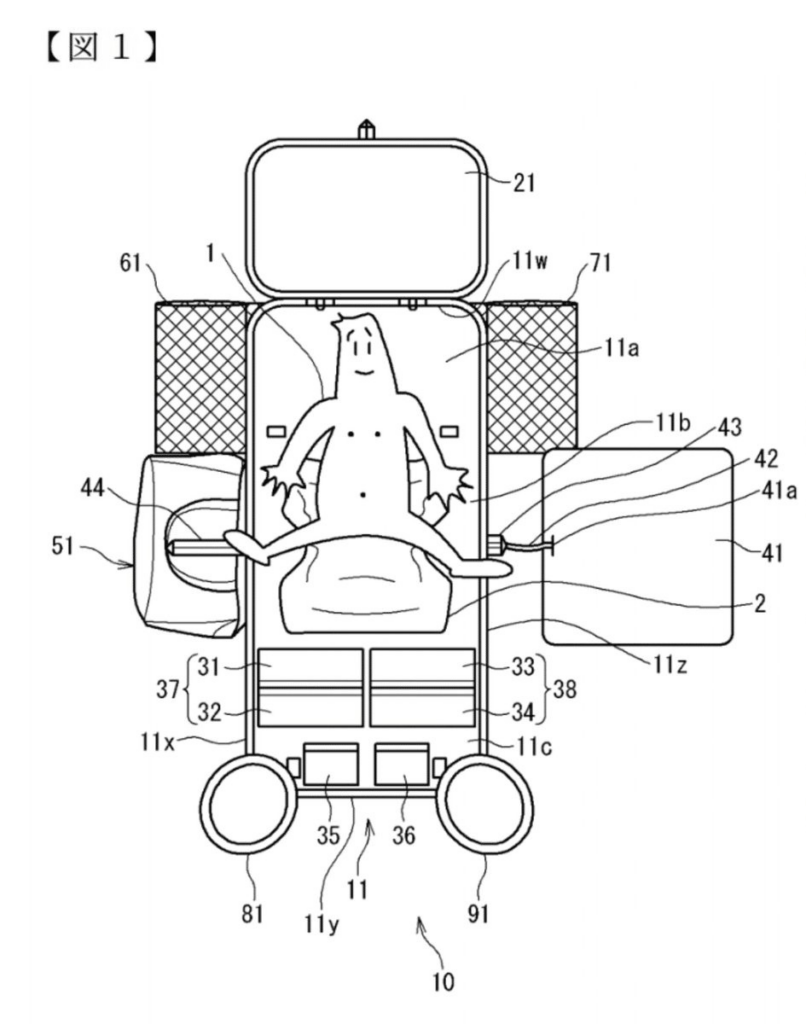
Diaper changing is a repetitive task that often involves kneeling or bending, placing physical strain on caregivers. This patent drawing presents a Baby Diaper Changing Station with Knee Pads, designed to reduce caregiver discomfort while ensuring the baby’s safety and stability during changing.
What the Patent Drawing Shows
The drawing reveals key structural features incorporated into the station:
- Cushioned knee pads positioned on both sides of the changing area
- A secure changing mat with elevated side supports
- Positioning elements that help prevent the baby from rolling
- Convenient storage areas placed within arm’s reach
- A stable frame designed for home or childcare environments
The combination of safety features and ergonomic support creates an efficient caregiving space.
How the Changing Station Works
The caregiver kneels on the built-in knee pads, reducing knee pressure.
The baby is placed onto the cushioned mat and held securely by side supports.
Supplies such as diapers and wipes are accessed from nearby compartments, allowing the caregiver to keep one hand on the baby at all times.
The workflow becomes safer, faster, and more comfortable.
Benefits for Daily Caregiving
- Reduces knee strain and improves posture
- Enhances baby stability and safety
- Keeps supplies organized and close at hand
- Suitable for homes, nurseries, and daycare centers
- Improves efficiency during frequent diaper changes
The design acknowledges the needs of both baby and caregiver.
Engineering & Safety Considerations
- Knee pads must offer durable cushioning
- Side supports should be strong yet smooth for safety
- Storage compartments require hygienic, easy-to-clean surfaces
- The overall structure must resist wobbling or tilting
- Materials should support long-term daily use
Ergonomics and safety remain central to the design.
Patent Attorney’s Thoughts
Caregiving is a daily rhythm, shaped by countless small movements.
By supporting the caregiver’s body while securing the baby, this invention turns an ordinary task into an experience of comfort, safety, and thoughtful design.
Application of the Technology: Human–Caretaker Ergonomic Synchronization and Micro-Gravity Support Surface Systems
Original Key Points of the Invention
- A diaper-changing station equipped with integrated knee pads for the caregiver.
- The design stabilizes posture, reduces strain, and keeps the caregiver close to the infant.
- Surface geometry and padding create a secure angle for both kneeling and leaning.
- Caregiver comfort directly improves safety and dexterity during infant care.
Abstracted Concepts
- Ergonomic synchronization between two bodies (caregiver and child).
- Using surface geometry to stabilize posture and reduce cognitive load.
- Embedding “mutual support zones” into caregiving environments.
- Designing for simultaneous protection of both caretaker and dependent.
Transposition Target
- A multi-surface support system for micro-gravity or low-gravity environments, enabling astronauts to perform delicate care tasks—human, robotic, or biological—via posture-locking surfaces.
Concrete Realization
In a space habitat, floating makes fine-motor caregiving nearly impossible.
A modular support surface is installed with textured anchor zones for knees, elbows, feet, and hips.
When an astronaut presses into the surface, micro-hooks and soft suction geometry “lock” posture gently without full restraint.
This allows precise handling of infants, lab organisms, or micro-robots in low gravity.
The changing station becomes a universal zero-gravity caregiving dock—turning posture itself into a stabilizing technology.
↓Related drawing↓