
- Introduction: Why Turn Onigiri Into Animal Characters?
- What the Patent Drawing Reveals About the Mold Structure
- How the Onigiri-Shaping Mechanism Works
- Benefits for Families, Bento Creators, and Food Education
- Engineering Considerations
- Patent Attorney’s Thoughts
- Application of the Technology: “Character Onigiri Mold Creation Platform”
- Final Reflections
Introduction: Why Turn Onigiri Into Animal Characters?
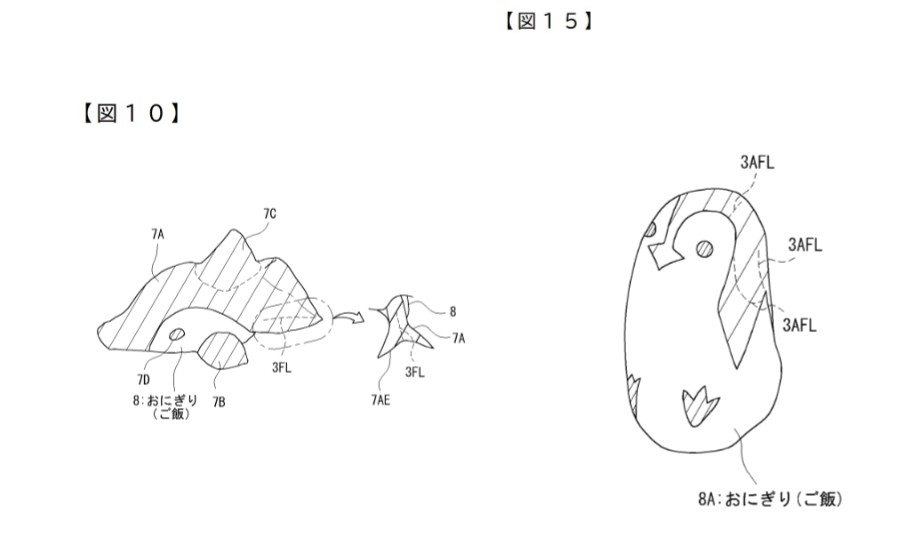
Onigiri has long been a staple of Japanese food culture—simple, portable, and endlessly customizable. This patent drawing introduces shaped rice ball molds designed to form animal-themed onigiri, transforming ordinary rice shapes into playful characters such as bears, rabbits, or pandas. The invention blends culinary creativity with practical molding technology.
What the Patent Drawing Reveals About the Mold Structure
The illustration highlights a multi-part mold engineered for easy shaping:
- A base mold tray with recessed animal outlines
- Pressing lids that match each character shape
- Side-release features for smooth unmolding
- Integrated texture surfaces for facial details
- Optional compartments to add layered colors or ingredients
The mold encourages consistent, adorable results regardless of user skill.
How the Onigiri-Shaping Mechanism Works
The design simplifies character-making into a few controlled steps:
- Warm rice is placed into the animal-shaped recess
- A matching lid applies uniform pressure
- Rice distributes evenly into ears, cheeks, or facial contours
- Side-release grooves allow clean removal
- Decorative nori or ingredients can be added using alignment guides
The mechanism turns home cooking into a creative craft.
Benefits for Families, Bento Creators, and Food Education
- Ideal for children’s lunches and themed events
- Encourages picky eaters through visual appeal
- Eases the process for those inexperienced with hand-molding
- Enables consistent shapes for commercial or café use
- Supports food education by making cooking fun and accessible
Character onigiri becomes a daily delight rather than a special effort.
Engineering Considerations
Key points behind the mold design include:
- Food-safe materials that withstand heat and moisture
- Sufficient rigidity to hold shape while pressing
- Smooth surfaces to prevent rice sticking
- Child-safe edges for family use
- Easy cleaning and modular storage
Practicality must pair with charm to fit everyday kitchens.
Patent Attorney’s Thoughts
Creativity often needs a simple vessel.
By shaping rice into friendly forms, this invention shows how design can make everyday food feel expressive—inviting joy through small, edible characters.
Application of the Technology: “Character Onigiri Mold Creation Platform”
Purpose
To shape rice into consistent, detailed animal-themed forms using a structured molding device.
System Components
- Animal-shaped base mold
- Matching compression lid
- Side-release grooves
- Texture-imprinting surfaces
- Optional ingredient compartments
Operational Flow
- Fill mold with warm rice.
- Press using the matching lid.
- Release shaped onigiri through side grooves.
- Add decorative elements.
- Serve or pack into a bento.
Final Reflections
This invention turns a cultural staple into a canvas—making onigiri not just food, but playful design.
Disclaimer: This content is an AI-generated reinterpretation based on a patent drawing.
It is provided for educational and cultural purposes only, and not as legal advice.
↓Related drawing↓