In this article, we introduce a patent related to a smoking surveillance system, focusing on how detection methods and monitoring workflows are translated into a technically structured and practical system design.
- Introduction: Technology for Detecting and Managing Smoking Behavior
- What the Patent Drawing Reveals About the Detection Framework
- How the Smoking-Recognition Mechanism Works
- Benefits for Facilities, Safety Management, and Public Health
- Engineering & Ethical Design Considerations
- Patent Attorney’s Thoughts
- Application of the Technology: Ambient Behavior Field Mapping and Autonomous Social-Atmosphere Correction Systems
Introduction: Technology for Detecting and Managing Smoking Behavior
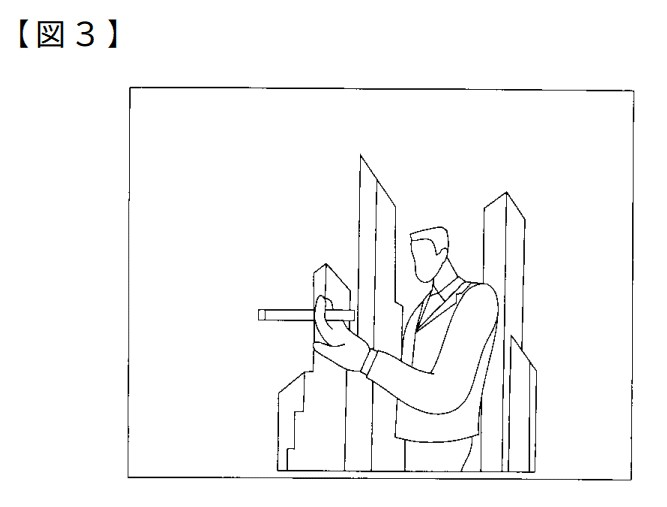
Smoking in restricted areas is a major safety and health concern in public spaces. This patent drawing introduces a smoking surveillance system capable of detecting cigarette-use behaviors—including hand movements, smoke, and environmental signs—to alert facility managers or trigger automated responses.
What the Patent Drawing Reveals About the Detection Framework
The diagram showcases a multi-sensor monitoring setup:
- A camera positioned to monitor user movement
- Hand-motion analysis to determine “smoking gestures”
- Smoke-detection sensors placed in surrounding areas
- A decision-processing unit that compares behavior to smoking patterns
- An alert system that notifies staff or triggers automated warnings
The system analyzes both behavioral cues and environmental signs.
How the Smoking-Recognition Mechanism Works
The system detects smoking through layered logic:
- The camera observes hand elevation and mouth proximity
- Motion patterns are analyzed to match smoking gestures
- Smoke sensors detect particulates or vapor
- The control module evaluates whether both cues indicate smoking
- Alerts are issued when behavior crosses a defined threshold
This multi-stage recognition improves accuracy in real-world environments.
Benefits for Facilities, Safety Management, and Public Health
- Prevents smoking in prohibited indoor or public areas
- Reduces false alarms by combining gesture + smoke detection
- Useful for stations, hospitals, hotels, and shared living spaces
- Improves facility compliance with health regulations
- Enhances monitoring without requiring additional human labor
It offers a modern solution for smoke-free environments.
Engineering & Ethical Design Considerations
Key considerations include:
- Privacy-conscious camera placement
- Sensor calibration for vapor, smoke, and lighting variation
- Real-time processing for consistent detection
- Durable housing for public installation
- Customizable alert intensity for different facilities
Balancing detection accuracy with user privacy is essential.
Patent Attorney’s Thoughts
Clear air is a shared promise.
By recognizing subtle gestures and smoke signals, this invention provides a quiet guardian for public spaces—helping communities stay healthy through unobtrusive technology.
Application of the Technology: Ambient Behavior Field Mapping and Autonomous Social-Atmosphere Correction Systems
Original Key Points of the Invention
- A system detects whether a person is smoking within a designated area.
- Sensors capture smoke, heat signatures, or hand-to-mouth motion.
- The system logs events, issues warnings, or triggers an alert.
- It provides automated enforcement for smoke-free zones.
Abstracted Concepts
- Detecting specific human micro-behaviors through atmospheric cues.
- Mapping actions within a space to maintain social or environmental standards.
- Turning “air disturbance” into a behavioral signal.
- Automated social-boundary enforcement without direct human intervention.
Transposition Target
- A behavior-field monitoring system that detects emotional turbulence—stress spikes, conflict signals, or social friction—based on micro-atmospheric changes and autonomously restores harmony.
Concrete Realization
Invisible atmospheric sensors measure not smoke but emotional particles: elevated CO₂ from stress-breathing, tremor-like micro-motions, temperature fluctuations from agitation.
When tension rises, the system reshapes the environment: soft lighting, targeted airflow, calming scent waves, or gentle white-noise fields.
Instead of catching smokers, it catches “emotional hotspots” and cools them.
Offices, homes, or crowds become self-regulating emotional microclimates—spaces that maintain harmony the way the original system maintained cleanliness.
↓Related drawing↓