

In this article, we a patent related to a presentation support system using a half mirror, focusing on how visual guidance and presenter assistance are translated into a technically structured and practical system design.
- Introduction: A Smarter Way to Present Without Losing Eye Contact
- What the Patent Drawing Reveals About the Half-Mirror Configuration
- How the Half-Mirror Presentation System Works
- Benefits for Speakers, Teachers, and Corporate Presenters
- Engineering & Usability Considerations
- Patent Attorney’s Thoughts
- Application of the Technology: Reality-Layer Fusion Interface for Cognitive Performance Enhancement
Introduction: A Smarter Way to Present Without Losing Eye Contact
Great presentations depend on eye contact—yet presenters often break it by looking at notes or screens. This patent drawing proposes a presentation support system using a half-mirror, allowing speakers to view guidance text while maintaining direct engagement with the audience.
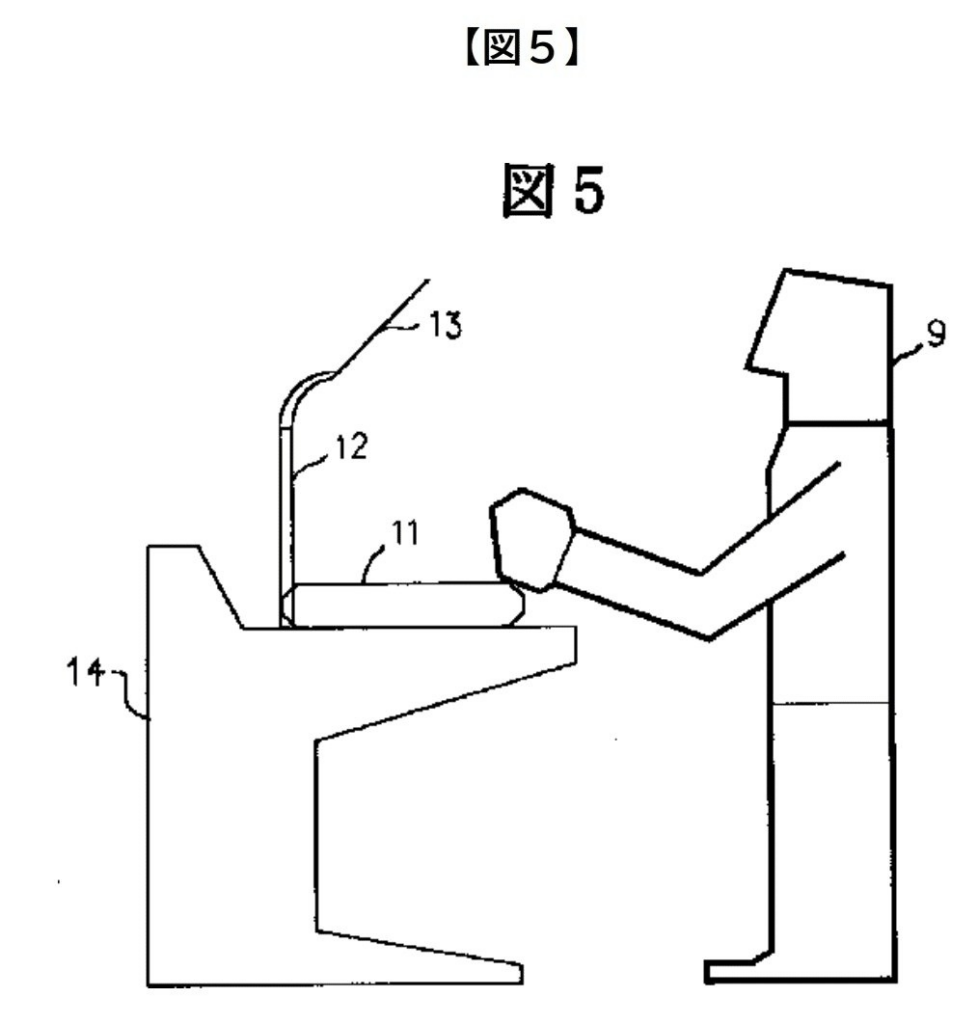
What the Patent Drawing Reveals About the Half-Mirror Configuration
The diagram illustrates a transparent–reflective hybrid display setup:
- A half-mirror positioned in front of the presenter
- A text or slide display placed beneath or behind the mirror
- Reflective properties that make the text visible only to the presenter
- The audience sees only the presenter, not the hidden display
- Adjustable mountings for angle optimization
The system resembles a teleprompter but is compact, discreet, and tailored for interactive presentations.
How the Half-Mirror Presentation System Works
The mechanism blends visibility and concealment:
- The presenter stands behind the half-mirror
- A screen projects text at an angle the mirror reflects
- The presenter reads the reflection while appearing to look forward
- The audience perceives a transparent panel or nothing at all
- Smooth delivery is maintained without glancing away
It creates seamless, confident communication.
Benefits for Speakers, Teachers, and Corporate Presenters
- Enables natural eye contact throughout the presentation
- Ideal for live lectures, corporate pitches, and ceremonies
- Reduces reliance on cue cards or laptop screens
- Improves clarity and timing for scripted content
- Provides a professional teleprompter-like experience without bulky equipment
It enhances both confidence and audience engagement.
Engineering & Usability Considerations
Key design elements include:
- Half-mirror reflectivity ratio optimized for visibility
- Adjustable tilt for presenters of different heights
- Anti-glare surface to preserve readability
- Stable frame for podium or desktop placement
- Compatibility with standard display devices
Precision optics ensure usability without distraction.
Patent Attorney’s Thoughts
A good presentation lives in the space between clarity and connection.
By letting presenters read while still looking forward, this invention preserves that human connection—quietly supporting the speaker from behind the mirror.
Application of the Technology: Reality-Layer Fusion Interface for Cognitive Performance Enhancement
Original Key Points of the Invention
- A half-mirror is positioned so the presenter can see notes or cues reflected while the audience sees only the presenter.
- The system overlays hidden information into the presenter’s visual axis without exposing it externally.
- Enables seamless, natural presentations without glancing away.
- Integrates reality (the presenter’s gaze) and hidden visual layers (support information).
Abstracted Concepts
- Using semi-transparent surfaces to merge visible and invisible informational layers.
- Delivering private cognitive support without interrupting outward performance.
- Allowing dual perception: public view vs. internal guidance.
- Embedding information into reality without altering the visible environment.
Transposition Target
- A cognitive-performance augmentation interface where users perceive multiple “reality layers” simultaneously—external world, internal guidance, emotional information, and predictive cues.
Concrete Realization
A wearable visor or architectural glass embeds a dynamic half-mirror layer.
The world remains visible, but supplemental layers—stress indicators, social cues, predicted trajectories, memory prompts—appear only to the wearer.
During conversations, subtle empathy cues appear as soft patterns; during work, predictive arrows overlay future steps; during creative flow, associative images drift across the user’s view.
People navigate the world through stacked realities, each layer tuned to their cognitive needs.
The original presentation tool evolves into a multi-layer reality-navigation system.
↓Related drawing↓