
- Introduction: Why Should a Cushion Respond to Human Emotion?
- What the Patent Drawing Reveals About the Adaptive Structure
- How the Emotion-Responsive Mechanism Works
- Benefits for Users and Wellness Environments
- Engineering Considerations
- Patent Attorney’s Thoughts
- Application of the Technology: “Emotion-Adaptive Comfort Cushion Platform”
- Final Reflections
Introduction: Why Should a Cushion Respond to Human Emotion?
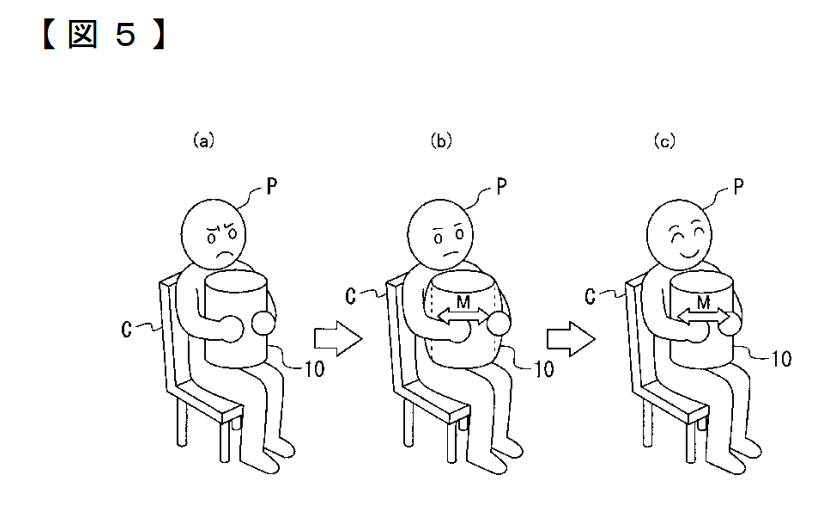
Comfort is not only physical—it’s emotional. A cushion that adjusts softness, shape, or support based on the user’s emotional state can enhance relaxation, reduce stress, and create a personalized rest experience. This patent drawing presents an emotional response cushion, a device designed to interpret user feedback and adjust its comfort level accordingly.
What the Patent Drawing Reveals About the Adaptive Structure
The illustration highlights a responsive cushioning system:
- A core cushion body with variable-density sections
- Sensors detecting pressure, movement, or emotional cues
- An internal mechanism adjusting firmness
- A controller interpreting input signals
- Outer layers designed for ergonomic comfort
The cushion’s internal structure is engineered to shift smoothly without disrupting the user.
How the Emotion-Responsive Mechanism Works
The system adapts in real time:
- Pressure or body movement sensors collect user data
- Signals are interpreted as emotional indicators (restlessness, relaxation, stress)
- Cushion modules expand or soften based on the analysis
- Feedback loop maintains the preferred comfort level
- Manual override options allow fixed settings
The cushion becomes a responsive partner to the user’s body and mood.
Benefits for Users and Wellness Environments
- Reduces physical tension by adjusting support automatically
- Provides soothing comfort for users experiencing stress
- Enhances rest time, meditation sessions, or naps
- Suitable for homes, therapy spaces, childcare, and elder care
- Offers a playful and emotional connection through tactile feedback
It transforms sitting and resting into a personalized emotional encounter.
Engineering Considerations
Key design factors include:
- Quiet and efficient actuation within the cushion
- Safe pressure levels for all body types
- Durable fabric and cushioning materials
- Responsive sensor algorithms
- Easy cleaning and maintenance for daily use
Reliable performance must coexist with softness.
Patent Attorney’s Thoughts
Comfort is communication.
By sensing subtle cues and responding with softness or firmness, this cushion becomes a quiet companion—one that listens with its surface and speaks through gentle adjustment.
Application of the Technology: “Emotion-Adaptive Comfort Cushion Platform”
Purpose
To provide a cushion that adjusts its support level based on the user’s emotional or physical state.
System Components
- Emotion-detection sensors
- Adjustable cushioning modules
- Control unit
- Soft ergonomic covering
- User override interface
Operational Flow
- Detect physical or emotional cues.
- Analyze user state.
- Adjust cushion density.
- Provide sustained comfort feedback.
- Update continuously during use.
Final Reflections
This invention blends emotion and engineering—turning a simple cushion into a responsive comfort device that supports both body and mind.
Disclaimer: This content is an AI-generated reinterpretation based on a patent drawing.
It is provided for educational and cultural purposes only, and not as legal advice.
↓Related drawing↓