

- Introduction: Why Design a Fully Enclosed, Comfort-Enhanced Sleeping Bag?
- What the Patent Drawing Reveals About the Enclosed Structure
- How the Comfort-Integrated Mechanism Works
- Benefits of a Fully Enclosed Comfort Sleeping Bag
- Engineering Considerations
- Patent Attorney’s Thoughts
- Application of the Technology: “Comfort-Integrated Enclosure Sleeping Platform”
- Final Reflections
Introduction: Why Design a Fully Enclosed, Comfort-Enhanced Sleeping Bag?
Sleeping bags are traditionally simple, insulated cocoons, but they often leave gaps where heat escapes or allow cold air to enter. This patent drawing introduces a fully enclosed sleeping bag equipped with integrated comfort-enhancing features, creating a private micro-environment ideal for warmth, relaxation, and secure rest. It transforms the idea of a sleeping bag from mere insulation into a controlled comfort space.
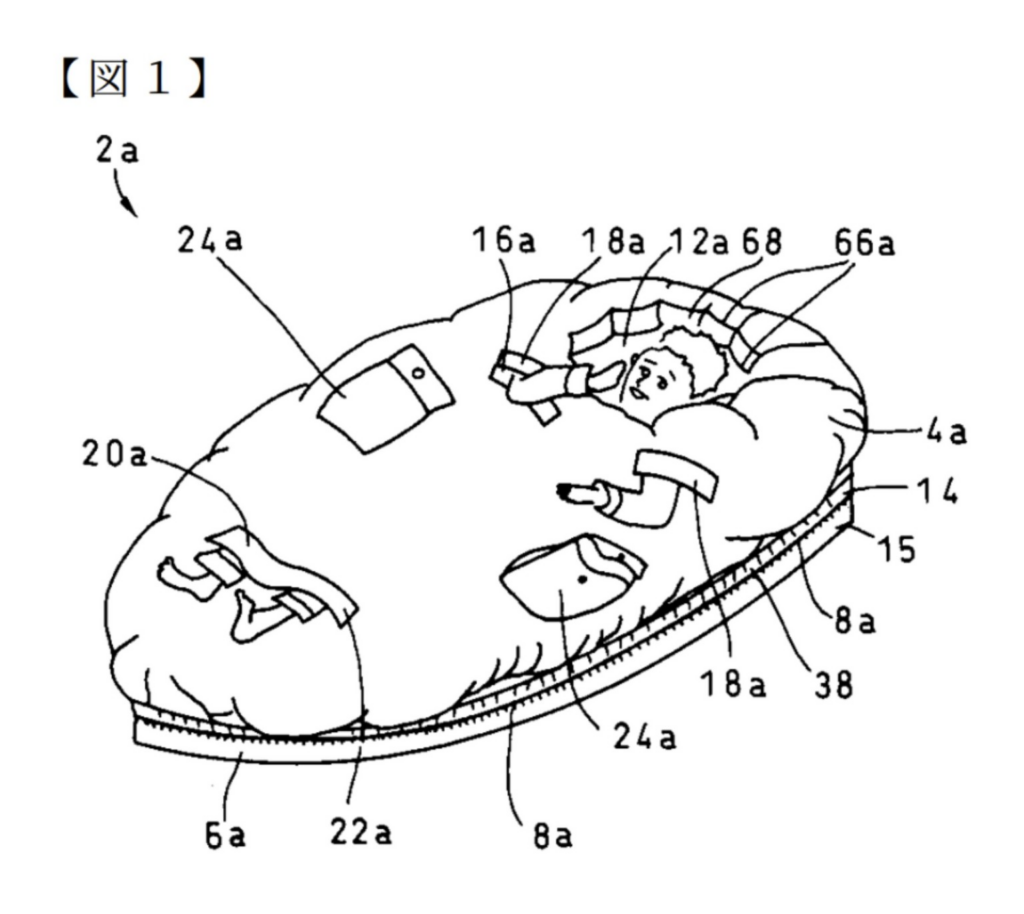
What the Patent Drawing Reveals About the Enclosed Structure
The illustration highlights several important structural features:
- A full-body enclosure that wraps the user in a sealed environment
- A hood or head-cover panel providing thermal protection
- Ventilation zones allowing controlled airflow
- An internal cushioning or padding layer
- A closure mechanism (zippers, flaps, or seals) preventing cold air intrusion
The result is a sleeping bag that balances insulation with breathability.
How the Comfort-Integrated Mechanism Works
The system combines enclosure and ergonomics to enhance overnight comfort:
- The user enters through a side or top opening
- The sleeping bag seals fully around the body
- Padding conforms to body contours
- Ventilation areas release moisture while retaining warmth
- Optional internal supports keep the interior spacious rather than compressing inward
It creates a stable microclimate ideal for outdoor or indoor use.
Benefits of a Fully Enclosed Comfort Sleeping Bag
- Ensures consistent warmth by minimizing heat loss
- Provides a sense of security, especially for children
- Reduces external noise and visual distractions
- Improves sleep quality through ergonomic padding
- Ideal for camping, disaster shelters, or relaxation pods
It’s both a functional survival tool and a personal comfort capsule.
Engineering Considerations
Designing such a system requires attention to:
- Breathability vs. insulation balance
- Materials that avoid moisture buildup
- High-quality closure mechanisms
- Lightweight but supportive padding
- Ergonomic shaping for natural sleeping positions
The invention depends on precise material selection and airflow design.
Patent Attorney’s Thoughts
A sleeping bag is often a silent companion—simple, protective, and personal.
This enclosed design deepens that companionship by shaping a space of warmth, quiet, and gentle isolation.
It reflects a thoughtful intent: to create comfort not by complexity, but through careful attention to enclosure and breathability.
It is a reminder that even the simplest forms of shelter can be refined with empathy.
Application of the Technology: “Comfort-Integrated Enclosure Sleeping Platform”
Purpose
To provide a fully enclosed sleeping environment that enhances warmth, comfort, and psychological security.
System Components
- Full-body enclosure shell
- Ergonomic cushioning layer
- Ventilation zones
- Thermal hood or head enclosure
- High-seal closure system
Operational Flow
- The user enters the enclosure through the designated opening.
- The sleeping bag seals to create an insulated microclimate.
- Cushioning conforms to the user’s body.
- Ventilation zones regulate moisture and temperature.
- The enclosure maintains a comfortable, resting environment.
Final Reflections
This design elevates a sleeping bag into a thoughtfully engineered personal retreat—warm, enclosed, and reassuring.
Disclaimer: This content is an AI-generated reinterpretation based on a patent drawing.
It is provided for educational and cultural purposes only, and not as legal advice.
↓Related drawing↓