
In this article, I introduce a patent related to a cat toilet monitoring system, focusing on how everyday pet care activities are translated into a technically structured monitoring and detection mechanism.
- Introduction: Turning a Cat’s Litter Box into a Health-Monitoring Device
- What the Patent Drawing Reveals About the Monitoring System
- How the Cat Toilet Monitoring Mechanism Works
- Benefits for Cat Owners, Veterinarians, and Pet-Tech Designers
- Engineering and Pet-Comfort Considerations
- Patent Attorney’s Thoughts
- Application of the Technology: Ambient Bio-Behavior Field Mapping and Autonomous Inter-Species Communication Systems
Introduction: Turning a Cat’s Litter Box into a Health-Monitoring Device
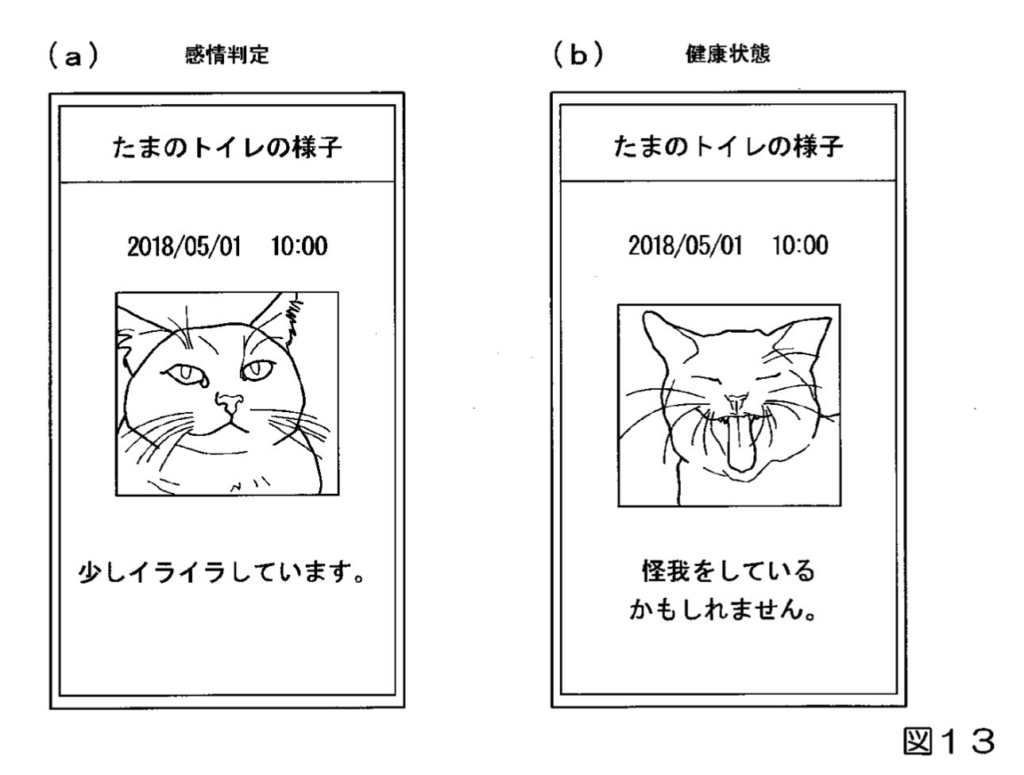
Cat owners often miss early signs of illness because behavioral or urinary changes are subtle. This patent drawing proposes a cat toilet monitoring system that automatically detects usage patterns, abnormalities, and environmental conditions—helping owners protect their pets’ health through data-driven observation.
What the Patent Drawing Reveals About the Monitoring System
The drawing illustrates a technologically enhanced litter box featuring:
- A weight sensor beneath the litter platform
- Optical or infrared detection to confirm entry and exit
- Ammonia or odor sensors for waste-level monitoring
- A digital module that records usage frequency
- Alert indicators or communication modules for owners
The system transforms routine toileting into meaningful health data.
How the Cat Toilet Monitoring Mechanism Works
The monitoring process integrates sensors and automated alerts:
- Weight sensors detect when the cat enters the box
- Infrared detectors track duration of stay
- Odor sensors measure waste concentration
- Data is analyzed to spot increases or decreases in bathroom visits
- Alerts notify owners when patterns suggest possible health issues
The system acts as an early-warning tool for urinary or digestive problems.
Benefits for Cat Owners, Veterinarians, and Pet-Tech Designers
- Detects early signs of kidney or urinary issues
- Helps track hydration levels and digestion
- Supports veterinarians with objective data
- Useful for multi-cat households with shared boxes
- Enhances smart-home integration for pet care
It supports proactive rather than reactive health management.
Engineering and Pet-Comfort Considerations
Key design factors include:
- Quiet sensors that don’t scare cats
- Non-intrusive structure preserving normal litter behavior
- Stable base to prevent tipping
- Hygienic materials resistant to odor absorption
- Low-energy sensing modules
Comfort and reliability must coexist for accurate monitoring.
Patent Attorney’s Thoughts
Care begins with noticing.
By turning a litter box into a silent observer of feline health, this invention adds technology to compassion—offering early insight into conditions that cats often hide.
Application of the Technology: Ambient Bio-Behavior Field Mapping and Autonomous Inter-Species Communication Systems
Original Key Points of the Invention
- A system monitors a cat’s toilet usage through sensors placed under or around the litter box.
- Detects weight, duration, frequency, and movement to determine health indicators.
- Logs data and sends alerts to owners about abnormal patterns.
- Provides non-invasive health observation through routine behavior monitoring.
Abstracted Concepts
- Reading biological states by detecting subtle, daily behaviors.
- Converting micro-movements and usage patterns into health or emotional signals.
- Continuous passive observation rather than active measurement.
- Building communication channels through interpreted behavior data.
Transposition Target
- A multi-species communication field that monitors not just animals, but humans, plants, or micro-environments, translating their subtle “behavior signatures” into readable emotional or health messages.
Concrete Realization
Sensors are embedded throughout a shared living space: under floors, in cushions, near plants, in pets’ resting areas.
The system reads micro-vibrations, moisture patterns, pressure shifts, thermal signatures, and rhythmic disturbance patterns.
A plant’s root stress appears as a slow “pulse”; a human’s fatigue becomes a heavy-wave signature; a pet’s joy shows as rapid scatter patterns.
A unified dashboard translates these signatures into a living tapestry of inter-species states.
The cat toilet monitor becomes the prototype for a home that listens to every living thing—and speaks their condition back to you.
↓Related drawing↓