
In this article, I introduce a patent related to a kneeling bicycle, focusing on how an unconventional riding posture is translated into a technically structured and practical vehicle design.
- Introduction: Rethinking Bicycle Posture Through a Kneeling Design
- What the Patent Drawing Reveals About the Kneeling Bicycle Structure
- How the Kneeling-Ride Mechanism Works
- Benefits for Mobility, Recreation, and Adaptive Cycling
- Engineering and Ergonomic Considerations
- Patent Attorney’s Thoughts
- Application of the Technology: Posture-Driven Locomotion Interface and Ground-Symbiosis Mobility Systems
Introduction: Rethinking Bicycle Posture Through a Kneeling Design
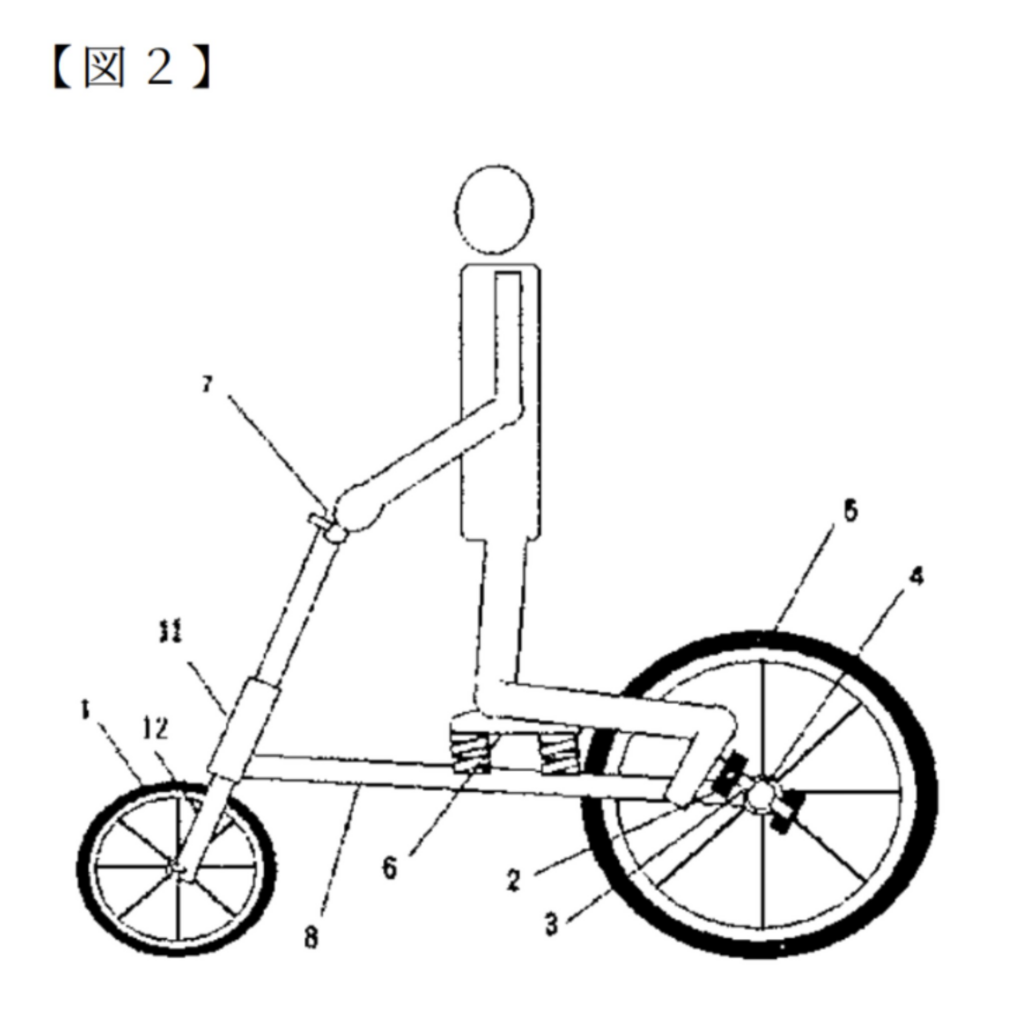
Traditional bicycles rely on seated posture, which can cause balance challenges and strain for some riders. This patent drawing introduces an innovative approach: a kneeling-style bicycle, where the rider supports their weight on cushioned knee rests while steering via an upright handlebar configuration. The design blends stability, ergonomics, and unconventional riding posture.
What the Patent Drawing Reveals About the Kneeling Bicycle Structure
The illustration highlights a unique, posture-focused frame configuration:
- A forward-leaning platform equipped with padded knee supports
- A rear footrest or platform for stability and propulsion
- Upright handlebars positioned for comfortable steering
- A compact frame geometry designed for low center of gravity
- Protective side coverings to secure the knees during motion
The structure prioritizes balance while enabling a fresh riding experience.
How the Kneeling-Ride Mechanism Works
The system modifies the standard riding dynamics:
- The rider kneels onto the padded supports
- Hands grip the front handlebars for steering
- Feet push from the rear platform to initiate momentum
- Kneeling posture lowers the center of gravity, improving stability
- Reduced seat pressure may increase comfort for certain users
It merges scooter-like propulsion with bicycle-style steering.
Benefits for Mobility, Recreation, and Adaptive Cycling
- Lower center of gravity improves balance for beginners
- Kneeling posture reduces load on the spine and hips
- Suitable for rehabilitation or low-impact exercise
- Provides a novel riding experience for leisure use
- Offers an alternative for users who struggle with traditional bicycle seating
A creative response to diverse rider needs.
Engineering and Ergonomic Considerations
Key considerations include:
- Cushion density for prolonged kneeling comfort
- Frame stability to support forward-lean posture
- Handlebar angle optimized for ergonomic control
- Safety padding around knee contact areas
- Durable foot platform with anti-slip treatment
Balancing comfort and safety is essential.
Patent Attorney’s Thoughts
Innovation begins where familiar forms are questioned.
By redefining how riders position their bodies, this kneeling bicycle expands what cycling can be—making movement possible in new, accessible ways.
Application of the Technology: Posture-Driven Locomotion Interface and Ground-Symbiosis Mobility Systems
Original Key Points of the Invention
- A bicycle designed to be ridden in a kneeling posture rather than sitting.
- The structure enhances stability by lowering the rider’s center of gravity.
- Knee-support and frame geometry absorb impact and reduce fatigue.
- Offers a new locomotion style combining cycling and grounded bodily contact.
Abstracted Concepts
- Using body posture as the primary interface for movement control.
- Mobility achieved through semi-grounded body engagement instead of seat-based positioning.
- Lower-body contact as a stabilizing and sensory feedback mechanism.
- Creating new vehicle categories by altering human–ground relationships.
Transposition Target
- A posture-responsive mobility ecosystem where kneeling, leaning, or shifting body geometry generates different modes of movement—land, sand, snow, water, or even low-gravity terrains.
Concrete Realization
A multi-surface mobility device resembles a “posture board” rather than a bike.
Kneeling initiates steady gliding; leaning forward triggers sprint mode; shifting to one knee enables carving turns like a hover surfboard.
Sensors detect micro-weight changes, allowing riders to navigate sand dunes, snowy plains, or soft moss terrains with intuitive body commands.
In low-gravity environments, the device becomes a lunar glider: knee-contact anchors stability while propulsion fans glide riders across the surface.
The kneeling bicycle transforms into a species of “ground-symbiosis vehicles,” where movement arises from intimate contact with the terrain.
↓Related drawing↓